Songs › The Beatles › Because
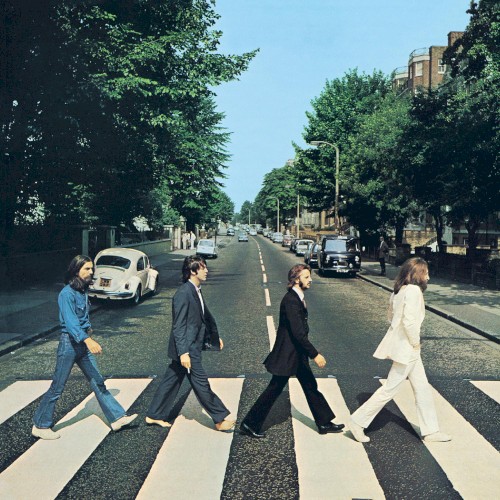
The Beatles
Because
Three singers, recorded three times, to make nine voices that never stood in one room.
Hollow marks: the other 49 scored songs · Hatched band: the Crossover Zone
The case
The strongest honest argument for each side, then the ruling.
The Garcia argument
The three sang their harmony together, live, around one set of microphones, and the blend of those particular voices is what the record is prized for. Take away the instruments and the performance stands alone, as later releases showed.
The Lennon argument
They then sang it twice more to make nine voices. The harmony is written in three parts over a written arpeggio played by the producer, with a synthesiser overdubbed twice. The drummer is not on the record at all: he kept time in the others' headphones. It took 23 takes to get three complete ones.
The verdict: GLI 95
A composed vocal score realised by overdub. It ranks above Strawberry Fields Forever because nothing in it was discovered along the way, and below Eleanor Rigby because three people did, at least, have to sing it together.
What is fixed
- All three vocal lines
- The arpeggio
- The tripled overdub
What is open
- The grain of three voices on the day
Evidence dimensions
Each runs from 0, Garcia, to 100, Lennon. Their weighted composite is 95. The published GLI is 95, the same.
A slow fixed form with no room in it.
Inferred. Nine voices from three singers cannot be staged.
Three written vocal lines over a written arpeggio.
Composed, then multiplied by overdub.
The nine-voice blend exists only on tape.
Transformational tolerance
Three singers could sing it. They could not sound like the record.
Confidence: 88%
Session accounts are detailed and consistent.
Keep arguing
Every placement is relative. These are the songs this one was measured against.
Cross-band twin
Closest song from the other band
 Attics of My LifeGLI 88The most Lennon song the Dead played, and a choir could sing it.Compare the two
Editorial counterpart
Chosen because it argues back
Attics of My LifeGLI 88Two songs that are three-part harmony from start to finish. The Beatles tripled theirs on tape. The Dead had to sing theirs live.
Compare the twoThe record
- Lennon, McCartney and Harrison sang the three-part harmony together, then recorded it twice more, giving nine voices.Source ↗
- The backing is George Martin on electric harpsichord, Lennon on guitar and McCartney on bass. Starr kept time in their headphones and is not on the record.Source ↗
- The backing track took 23 takes, only three of them complete.Source ↗
- Harrison overdubbed a Moog synthesiser twice.Source ↗
Where the sources disagree
- No source that was opened states whether the Beatles ever played it live. It was recorded after they stopped touring.
Catalog facts
- Catalog no.
- GLI·TB·024
- Artist
- The Beatles
- Writers
- Lennon–McCartney
- Release
- Abbey Road (1969)
- Released
- 26 September 1969
- Duration
- 2:45
Sources
Classified 5 October 2026