Songs › The Beatles › Yesterday
The Beatles
Yesterday
One Beatle, one guitar, a scored quartet. Then the whole band played it in a different key.
Hollow marks: the other 49 scored songs · Hatched band: the Crossover Zone
The case
The strongest honest argument for each side, then the ruling.
The Garcia argument
This song does not need its recording. McCartney sang it alone on television in one key, and on tour all four Beatles played it in another with no strings at all. It has been performed by a great many people since. The record took two takes.
The Lennon argument
Melody, words and harmony were complete before the session, and the string quartet plays a written score down to the instruction not to use vibrato. McCartney is the only Beatle on it. Each of its many performances reproduces the same content.
The verdict: GLI 93
The Beatles' Ripple, a notch further along. Its information is entirely predetermined and entirely portable. It ranks below Strawberry Fields Forever and Because because the recording is dispensable, and above nearly everything else because nothing in it was found by playing.
What is fixed
- Melody
- Lyric
- Harmony
- The quartet score
What is open
- Key
- Who accompanies it
Evidence dimensions
Each runs from 0, Garcia, to 100, Lennon. Their weighted composite is 93. The published GLI is 93, the same.
Two minutes, every bar set.
Performed live in two keys and two instrumentations, with the content unchanged.
Melody, lyric and quartet score were all written.
Composed and scored.
Lower than its neighbours. The song travels without the record.
Transformational tolerance
High, in the way Ripple's is: it survives anything because it is all on paper.
Confidence: 90%
Fully documented, with a performance history on television and on tour.
Keep arguing
Every placement is relative. These are the songs this one was measured against.
GLI neighbours
Numerically closest
 Happiness Is a Warm GunGLI 92
 Strawberry Fields ForeverGLI 94
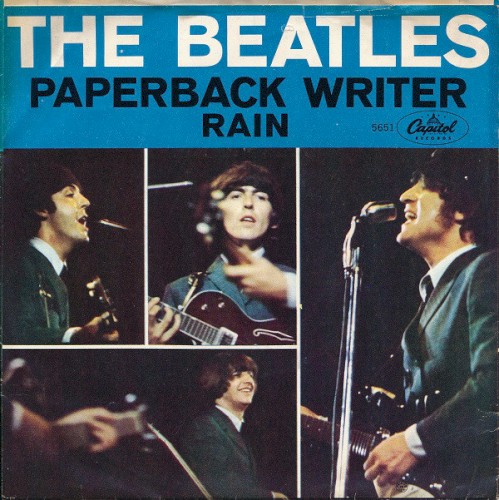 RainGLI 91
Cross-band twin
Closest song from the other band
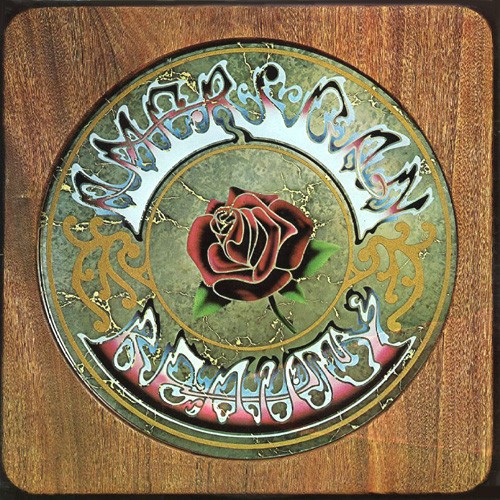 Attics of My LifeGLI 88The most Lennon song the Dead played, and a choir could sing it.Compare the two
Editorial counterpart
Chosen because it argues back
RippleGLI 81The two most portable songs on the Index. Each survives any setting because everything that matters was written down.
Compare the twoThe record
- McCartney recorded vocal and acoustic guitar together in two takes on 14 June 1965. Take 2 was used.Source ↗
- A string quartet was overdubbed three days later. McCartney is the only Beatle on the recording.Source ↗
- George Martin wrote most of the score, with McCartney insisting on no vibrato and adding details of his own.Source ↗
- On television it was done in F by McCartney alone with strings. On tour in 1965–66 all four Beatles played it in G.Source ↗
Where the sources disagree
- Track length is listed as 2:05 and 2:03.
Catalog facts
- Catalog no.
- GLI·TB·010
- Artist
- The Beatles
- Writers
- Lennon–McCartney
- Release
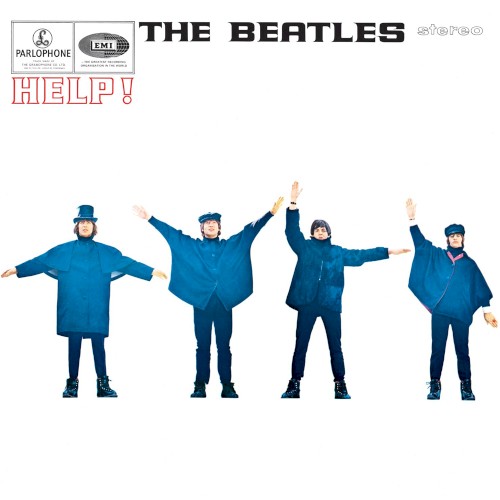
- Help! (1965)
- Released
- 6 August 1965
- Duration
- 2:05
Sources
Classified 5 October 2026