Songs › Grateful Dead › Friend of the Devil
Grateful Dead
Friend of the Devil
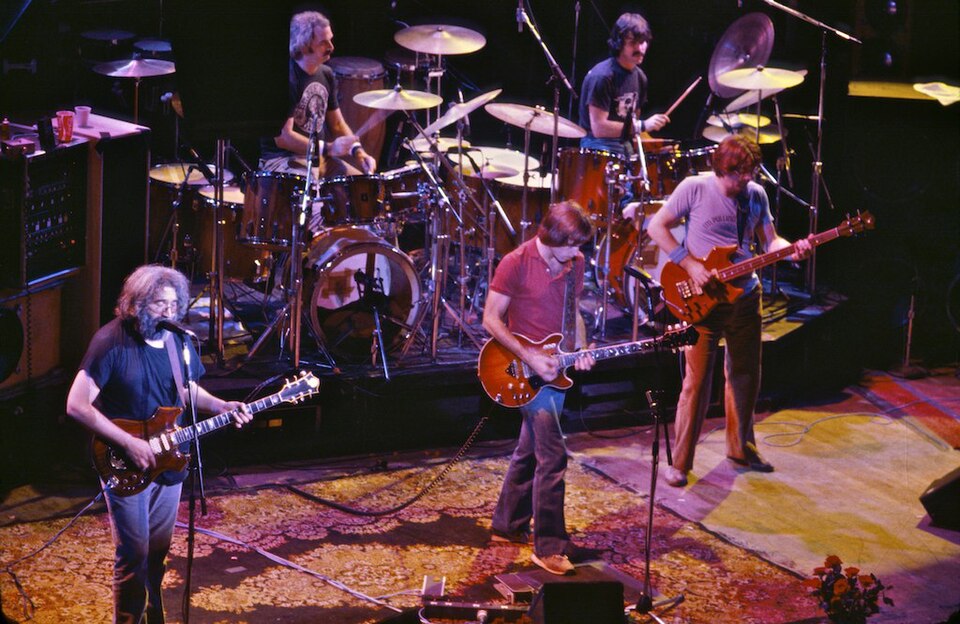
The band slowed it to half speed, and it was still the same song.
Hollow marks: the other 49 scored songs · Hatched band: the Crossover Zone
The case
The strongest honest argument for each side, then the ruling.
The Garcia argument
In 1976 the Dead began playing this at a fraction of its original tempo, with long guitar and keyboard solos. A live version from 1980 runs 7:28 against 3:24 on the record. It had already moved from acoustic to electric. Few songs in the catalogue were transformed this completely.
The Lennon argument
That it survived the transformation is the Lennon argument. Three writers finished the melody, the lyric and the chords before it was recorded, and what makes it Friend of the Devil is in that writing. Change the tempo and the instruments and all of it is still there. The solos run over the written changes.
The verdict: GLI 70
A written song that tolerates anything because its identity is on paper. The slow arrangement adds real improvised content, which keeps it below Ripple and Casey Jones. Transformational tolerance here is evidence for Lennon.
What is fixed
- Melody
- Lyric
- Chord sequence
- Form
What is open
- Tempo
- Acoustic or electric
- Solos over the changes
Evidence dimensions
Each runs from 0, Garcia, to 100, Lennon. Their weighted composite is 69. The published GLI is 70, 1 higher after comparison with neighbouring songs. The allowed margin is 6.
Verse, chorus and bridge in a fixed order.
The 1970 version and the 1976 version are at roughly half and full speed of each other.
Melody, lyric and changes were complete at the writing stage.
Composed, with solo choruses added over the form in the slow arrangement.
The studio cut is one reading. The band abandoned its tempo for good.
Transformational tolerance
Tested harder than almost any song here. Slowed to a crawl, it was still the same song.
Confidence: 86%
The change of arrangement is dated and sourced. Only one performance count was found.
Keep arguing
Every placement is relative. These are the songs this one was measured against.
Cross-band twin
Closest song from the other band
 While My Guitar Gently WeepsGLI 71The lead guitar that defines the record was played by a guest.Compare the two
Editorial counterpart
Chosen because it argues back
While My Guitar Gently WeepsGLI 71Two written songs that exist in a quiet version and a loud one. Both survive the change.
Compare the twoThe record
- The studio track is largely acoustic, with David Grisman on mandolin.Source ↗
- Played acoustically through 1970, it came back in 1972 in electric arrangements.Source ↗
- Garcia introduced a much slower arrangement in late 1975 and the Dead adopted it in 1976.Source ↗
- After 1976 it was played slower, with extended guitar and keyboard solos.Source ↗
- The Dead Set live version from October 1980 runs 7:28, more than twice the 3:24 of the record.Source ↗
Where the sources disagree
- Only one performance count was found (setlist.fm).
Catalog facts
- Catalog no.
- GLI·GD·013
- Artist
- Grateful Dead
- Writers
- Jerry Garcia / John Dawson / Robert Hunter
- Release
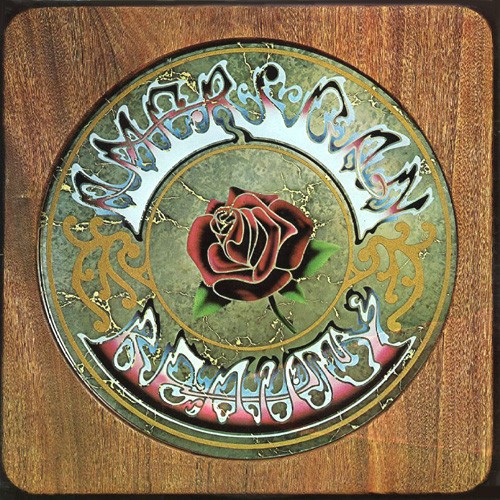
- American Beauty (1970)
- Released
- 1 November 1970
- Duration
- 3:24
- Performed
- 312 times (setlist.fm)
- First played
- 20 March 1970
- Last played
- 24 June 1995
Sources
- Wikipedia: Friend of the Devil
- dead.net: Greatest Stories Ever Told, Friend of the Devil
- deaddisc: Friend of the Devil
- Wikipedia: Dead Set
Classified 5 October 2026