Songs › Grateful Dead › China Cat Sunflower
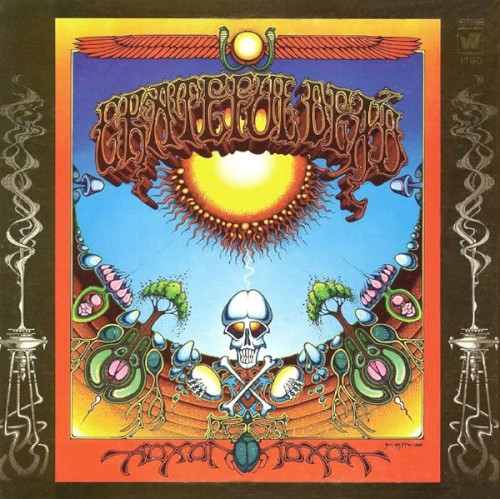
Grateful Dead
China Cat Sunflower

The record has a chorus the band stopped singing almost immediately.
Hollow marks: the other 49 scored songs · Hatched band: the Crossover Zone
The case
The strongest honest argument for each side, then the ruling.
The Garcia argument
After its debut the song changed key, tempo and arrangement within months. The chorus on the studio recording was dropped from the stage version very early. It moved from E to G for a practical reason: to make the jam into I Know You Rider easier. More than 500 times over 26 years, the song ended by dissolving into that transition.
The Lennon argument
The body of the song is tightly composed. The guitars play interlocking written figures, and Hunter's lyric is fixed and dense. Those riffs identify it in a second, and they were played the same way for a quarter of a century.
The verdict: GLI 45
The composed part and the open part are close to equal weight. The riffs are as fixed as anything the Dead wrote, and the song always exits through a jam. The band rewriting its key and form for the sake of the transition tips it just to the Garcia edge of Dead Center.
What is fixed
- The interlocking riffs
- Three verses
- The lyric
What is open
- The transition jam
- Its length
- Tempo and feel
Evidence dimensions
Each runs from 0, Garcia, to 100, Lennon. Their weighted composite is 45. The published GLI is 45, the same.
Interlocking written riffs and three verses, with a transition section of no set length.
It changed key from E to G and lost its chorus on the way to the stage.
The riffs are composed in detail. The passage that leads out of them is not.
Counterpoint between the guitars, then a jam that has to arrive at another song.
The studio version has a chorus the band dropped almost at once.
Transformational tolerance
It changed key, lost a chorus and gained a permanent partner, and stayed itself.
Confidence: 88%
552 documented performances and sourced changes of key, tempo and arrangement.
Keep arguing
Every placement is relative. These are the songs this one was measured against.
GLI neighbours
Numerically closest
 I Want You (She's So Heavy)GLI 44
 Morning DewGLI 46
 Shakedown StreetGLI 43
Cross-band twin
Closest song from the other band
I Want You (She's So Heavy)GLI 44The composition leans Garcia. The record leans Lennon. They nearly cancel.Compare the twoEditorial counterpart
Chosen because it argues back
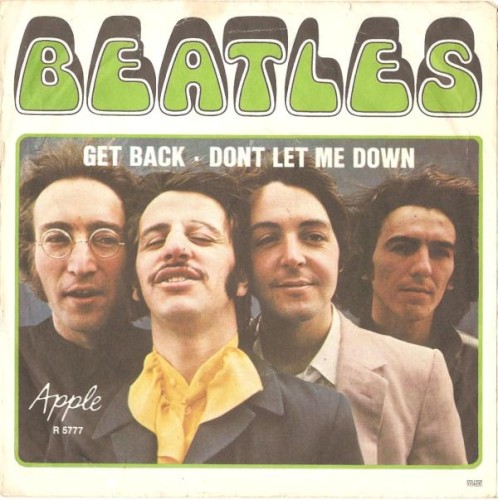 Don't Let Me DownGLI 47
Two songs that sit at the centre from opposite habits: one always left open at the end, one played live but kept closed.
Compare the twoThe record
- After its January 1968 debut the song changed key, tempo and arrangement over the following months.Source ↗
- It began in E and moved to G to ease the transition into I Know You Rider.Source ↗
- From 1969 it was paired with I Know You Rider more than 500 times.Source ↗
- The chorus heard on the studio recording was dropped from live performances very early.Source ↗
- On Europe '72 it runs 5:33 before the segue. The studio track runs 3:40.Source ↗
Where the sources disagree
- Performance count: 552 (dead.net) or 574 (setlist.fm).
- The Rider pairing began on 30 September 1969 (Wikipedia) or in the summer of 1969 (dead.net).
Catalog facts
- Catalog no.
- GLI·GD·011
- Artist
- Grateful Dead
- Writers
- Jerry Garcia / Robert Hunter
- Release
- Aoxomoxoa (1969)
- Released
- 20 June 1969
- Duration
- 3:40
- Performed
- 552 times (dead.net); 574 per setlist.fm
- First played
- 17 January 1968
- Last played
- 8 July 1995
Sources
- Wikipedia: China Cat Sunflower
- dead.net: Greatest Stories Ever Told, China Cat Sunflower
- whitegum: China Cat Sunflower
- deaddisc: China Cat Sunflower
Classified 5 October 2026