Songs › The Beatles › I Want You (She's So Heavy)
The Beatles
I Want You (She's So Heavy)
The composition leans Garcia. The record leans Lennon. They nearly cancel.
Hollow marks: the other 49 scored songs · Hatched band: the Crossover Zone
The case
The strongest honest argument for each side, then the ruling.
The Garcia argument
Very little is written: a lyric of about a dozen words, a blues-derived verse and an arpeggiated riff. The rest is space. The basic track was played live in the room across 35 takes at Trident on 22 February 1969, and in the verses the guitar and bass shadow the voice freely. Hand this material to a band on a stage and it would stretch and change every night.
The Lennon argument
The Beatles never handed it to a band on a stage. The closing three minutes were assembled: guitars multitracked by Lennon and Harrison in April, white noise from a Moog added in August, the layers rising on a planned curve. Then Lennon told the engineer to cut the tape right there. That cut is part of the song now, and it cannot be performed. It can only be reproduced.
The verdict: GLI 44
The repetition settles nothing. A vamp can be a platform or a fixed design, and this one is both. The composition is small and open; the canonical object was deliberately built. It lands just on the Garcia side of centre because the vamp carries almost no information of its own. What it means depends on how it is played and for how long, and that is exactly what the tape cut decides.
What is fixed
- The lyric
- The riff
- The layered build of the coda
- The tape cut
What is open
- Guitar and bass lines in the verses
- In principle, the length of the vamp
Evidence dimensions
Each runs from 0, Garcia, to 100, Lennon. Their weighted composite is 44. The published GLI is 44, the same.
The verses run in order. The length of the closing vamp was set by a tape cut, and nothing in the music fixes it.
Inferred from 35 takes of the basic track and no stage history.
A dozen words and a riff were written. The layering of the last three minutes was planned in the studio.
Two methods. The verses develop by live interplay. The coda develops by overdub.
The Moog noise and the cut ending exist only on tape.
Transformational tolerance
The verses would survive almost any band. The ending survives none. It can only be reproduced.
Confidence: 72%
No live performance by the Beatles. The Garcia case rests partly on what the material would allow, which is inference.
Keep arguing
Every placement is relative. These are the songs this one was measured against.
Cross-band twin
Closest song from the other band
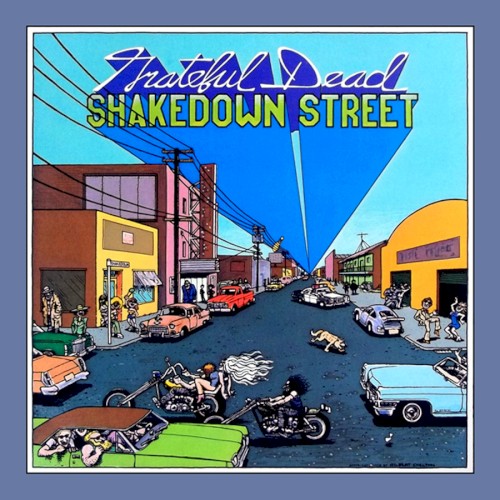 Shakedown StreetGLI 43Built in the studio as a dance record. Played on stage as something else within days.Compare the two
Editorial counterpart
Chosen because it argues back
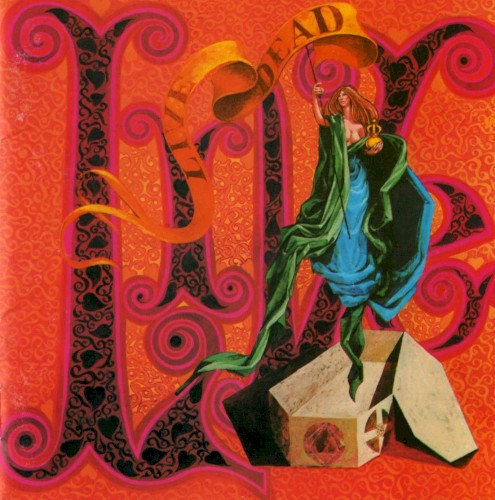 Dark StarGLI 4
Two long pieces built on very little written material. Only one of them was ever allowed to change.
Compare the twoThe record
- Sessions began 22 February 1969 at Trident Studios with 35 takes of the basic track.Source ↗
- Lennon and Harrison multitracked guitars for the closing section on 18 April 1969. Lennon added Moog white noise on 8 August.Source ↗
- The ending is a tape cut. Lennon told engineer Geoff Emerick to "cut it right there"; the edit was made on 20 August 1969.Source ↗
Catalog facts
- Catalog no.
- GLI·TB·003
- Artist
- The Beatles
- Writers
- Lennon–McCartney
- Release
- Abbey Road (1969)
- Released
- 26 September 1969
- Duration
- 7:47
Sources
Classified 5 October 2026