Songs › Grateful Dead › The Other One
Grateful Dead
The Other One
It began as the middle of a composed suite. The band kept only the part that left room.
Hollow marks: the other 49 scored songs · Hatched band: the Crossover Zone
The case
The strongest honest argument for each side, then the ruling.
The Garcia argument
What is fixed is a rhythmic cell and two short verses. Everything between verse one and verse two is open, and the band used that opening in at least 586 known performances. The piece breaks down into free playing, swallows other songs whole and comes back when somebody decides it should. Where it starts and where it ends move from night to night.
The Lennon argument
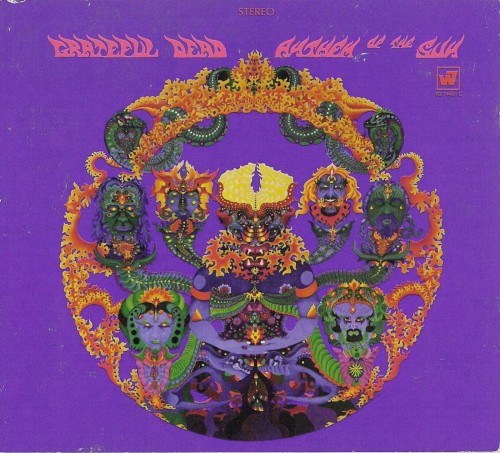
It began as the centre of a composed suite on Anthem of the Sun, with a written prelude and reprise on either side. The riff is rigid, and Weir sings the same words to the same melody every time. Next to Dark Star, more of the frame is nailed down.
The verdict: GLI 10
The suite fell away and the band kept the part that left room. The riff gives the players something to push against without telling them what to play. It is a little more specified than Dark Star, so it sits a little to its right.
What is fixed
- The triplet riff
- Two verses
- The bass entry that announces it
What is open
- Duration
- Everything between the verses
- Whether the pulse holds
- What it swallows or leads into
Evidence dimensions
Each runs from 0, Garcia, to 100, Lennon. Their weighted composite is 9. The published GLI is 10, 1 higher after comparison with neighbouring songs. The allowed margin is 6.
A rhythmic cell and two short verses. Everything between them is unmeasured.
The entry, the exit and the middle all move. It regularly dissolves into free playing and absorbs other songs.
The riff says how to push, not what to play.
Interaction around a pulse, with the band free to abandon the pulse.
The Anthem of the Sun version is a studio collage of live tapes, and the band left it behind almost at once.
Transformational tolerance
It survived losing the suite it was written into. What it cannot lose is the galloping figure.
Confidence: 95%
At least 586 documented performances across 27 years.
Keep arguing
Every placement is relative. These are the songs this one was measured against.
Cross-band twin
Closest song from the other band
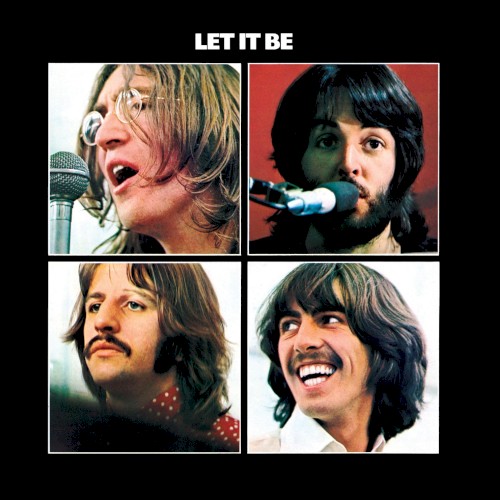 Dig ItGLI 14The Beatles did not write this one. They played it.Compare the two
Editorial counterpart
Chosen because it argues back
 Yer BluesGLI 31
Two frames built for playing. One was stretched for 27 years. The other was never given the chance.
Compare the twoThe record
- First released inside the suite "That's It for the Other One" on Anthem of the Sun.Source ↗
- Played at least 586 times, which puts it among the band's most-performed pieces.Source ↗
- Still in the set at Soldier Field on 8 July 1995.Source ↗
Where the sources disagree
- First performance: 3 February 1968 (dead.net), 17 February 1968 (setlist.fm) or October 1967 (deaddisc).
Catalog facts
- Catalog no.
- GLI·GD·002
- Artist
- Grateful Dead
- Writers
- Bob Weir / Bill Kreutzmann
- Release
- Released as the middle section of "That's It for the Other One", Anthem of the Sun, 18 July 1968.
- Released
- 18 July 1968
- Duration
- 7:40 (full suite)
- Performed
- 586 times (dead.net ("at least 586 times that we know of")); 497 per setlist.fm
- First played
- 3 February 1968
- Last played
- 8 July 1995
Sources
- Wikipedia: That's It for the Other One
- dead.net: Greatest Stories Ever Told, The Other One
- deaddisc: The Other One
- GDAO: Soldier Field, 8 July 1995
Classified 5 October 2026